
Where to Travel in Autumn: 10 European Destinations to Discover This Season
From the Julian Alps and the Scottish Highlands to Seville and the vineyards of the Douro, autumn is one of the best seasons to explore Europe.
When we think about traveling around Europe, summer usually gets almost all the attention. July and August bring the main holiday period, beaches are in full season and many cities welcome their highest number of visitors. Yet wait just a few weeks and you will find a completely different Europe. Temperatures drop, the days take on a softer light, streets return to a more everyday rhythm and landscapes begin to turn yellow, ochre and red. For many destinations, autumn is not simply an alternative to the high season: it is one of the most interesting times of year to visit.
Traveling in September, October or November also means choosing between very different experiences. In the north and in mountainous regions, forests gradually enter their most spectacular phase; in major cities, spending hours walking around becomes much more enjoyable; while in southern Europe, some destinations still have a climate that extends the feeling of summer. In wine regions, autumn also coincides with the grape harvest, transforming both the landscape and local cuisine.
That means there is no single perfect destination for autumn travel. It all depends on whether you are looking for nature, a cultural getaway, good food, pleasant temperatures or simply the chance to see popular places after summer is over. These are some of our favorites.
1. Lake Bled and the Julian Alps, Slovenia

Some places seem to have been designed specifically for autumn, and Lake Bled is one of them. The small island in the middle of the lake, its hilltop church, the castle built on a cliff and the mountains in the background create one of Slovenia’s most recognizable views. When the trees surrounding the water begin to change color, the landscape gains even more depth.
Bled usually attracts many visitors during summer, so traveling after August offers a very different pace. Walking around the lake, climbing to one of its viewpoints or crossing the water in the traditional wooden boats known as pletna are much more peaceful once the summer crowds have thinned. Slovenia’s tourism office itself highlights autumn as an especially interesting season thanks to the landscape’s colors, seasonal cuisine and fewer visitors.
But it would be a mistake to travel here and limit yourself to Bled. Slovenia is a small country, which works very much in the traveler’s favor. From the lake, you can continue to Triglav National Park, Kranjska Gora or Lake Jasna, where the Julian Alps are reflected in the water. If you have several days, Ljubljana can complete the trip with a much more relaxed urban stop.
Best time: late September and October, especially if you want to combine hiking with autumn colors.
2. Prague, Czech Republic

Prague works at virtually any time of year, but autumn suits it particularly well. The city’s Gothic and Baroque architecture, towers, reddish rooftops and the Vltava River create a setting that seems almost made for the trees’ golden tones. Mornings start to feel cool, cafés become genuinely inviting again and walking for hours stops being the endurance test it can sometimes become during summer.
Charles Bridge remains one of the busiest places, of course, but getting up a little earlier is enough to find a much quieter city than in the height of summer. From there, a good route can continue through Malá Strana, climb toward Prague Castle and finish with a walk through Petřín. Another option is to follow the Vltava riverbank, gradually moving away from the busiest areas of the historic center.
The parks also take on a different importance at this time of year. Letná, Stromovka and the gardens around Petřín offer very different views of the city as the trees change color. VisitCzechia specifically points to this combination of still-pleasant temperatures and autumn scenery as one of Prague’s attractions during these months.
Prague also has an important advantage for an autumn getaway: it does not depend especially on good weather. If a gray or rainy day arrives, the city still offers museums, churches, historic beer halls, cafés and buildings to explore. You do not need to chase blue skies to feel that the trip was worthwhile.
Best time: October, although late September often still brings milder temperatures.
3. Bavaria and the German Alps, Germany

Germany has countless landscapes that change with the arrival of autumn, but the south of the country is probably where that transformation is most evident. Bavaria combines lakes, forests, small towns, mountains and some of Europe’s best-known castles. In autumn, all these elements are surrounded by a completely different palette.
Neuschwanstein Castle is the obvious example. Located near Füssen and very close to the Alps, it attracts millions of visitors every year, but seeing it among yellow and red mountains and forests offers a very different perspective from the typical summer image. From this area, you can also explore sections of the Romantic Road or head toward the Allgäu and the alpine landscapes of southern Bavaria.
Autumn also coincides with a distinctive tradition in alpine regions: the Almabtrieb, when livestock comes down from mountain pastures to the valleys after summer. In different Bavarian towns, this return becomes a local celebration with music and food. Germany’s national tourism office highlights these traditions, along with hiking and colorful forests, among the season’s main attractions.
If you prefer cities to nature, Munich can work as a starting point, although spending at least two or three days exploring the surrounding area completely changes the trip.
Best time: from late September to mid- or late October.
4. The Dolomites, Italy

Italy appears on almost every list of European destinations, but in autumn it is worth looking farther north than Rome, Florence or Venice. The Dolomites offer one of Europe’s most impressive mountain landscapes, and September and October can completely transform the experience.
When the larches begin to take on their characteristic golden tone, enormous gray rock faces are surrounded by splashes of color that contrast with alpine meadows and lakes. Towns such as Ortisei, Selva di Val Gardena and Cortina d’Ampezzo make good bases for exploring the region, while places such as Lago di Braies, Alpe di Siusi and Val Gardena allow you to combine walks, scenic drives and small villages.
There is also a phenomenon particularly associated with these mountains. At sunrise and, above all, sunset, certain Dolomite formations take on pink, red and orange tones when they catch the sunlight. It is known as enrosadira, a word originating in Ladin, and autumn is one of the best times to see it. In Val Gardena, the contrast becomes even more striking from mid-September, when the larches also begin to change color.
Here, more planning is advisable than for an urban getaway. Mountain weather can change quickly, and some lifts, mountain huts and facilities reduce their activity between the summer and winter seasons. That is precisely why it is worth checking what is open before planning each route rather than improvising everything on arrival.
Best time: the second half of September and the first half of October, depending on altitude and conditions each year.
5. The Loire Valley, France

The Loire Valley is often presented as “the land of castles,” and for good reason. Chambord, Chenonceau, Amboise, Villandry and Chaumont-sur-Loire turn a journey through this French region into an almost endless succession of palaces, gardens and historic towns. But autumn introduces another element that completely changes the landscape: vineyards.
The intense greens of summer begin to disappear, and the vines take on yellow, orange and reddish tones. The castle gardens also change, while the secondary roads crossing the valley become part of the journey itself. This is one of those destinations where having a car can make all the difference, allowing you to stop in villages and rural areas that would be much harder to include on a route relying exclusively on public transport.
Food and wine are another good reason to choose this season. You do not need to be especially interested in wine tourism to enjoy visiting a winery or trying local products after spending the day exploring castles. Autumn also brings a sense of calm back to monuments that can receive huge numbers of visitors during the central summer months. The Loire Valley regularly appears among the European destinations that are especially appealing at this time of year thanks to its combination of castles, vineyards and autumn color.
A four- or five-day route allows you to see a good part of the valley without turning the trip into a race to check castles off a list. Tours, Blois and Amboise work well as bases depending on the itinerary.
Best time: October.
6. Perthshire and the Highlands, Scotland

If the image you have in mind when you think of autumn includes copper-colored forests, lochs, mist and small villages, Scotland is probably the destination on this list that comes closest to it.
One of the most interesting areas lies around Perthshire, between the Highlands and the Lowlands. This is where you will find Pitlochry, Loch Faskally, Dunkeld and The Hermitage, a forest crossed by trails and waterfalls and home to some monumental trees. In October, Scotland’s tourism organization considers this region one of the highlights of the season’s colors and ranks the month among the best times to visit.
From there, you can extend the trip into the Highlands or combine a few days in nature with Edinburgh. The latter is an especially good option if the trip is approaching November: although days are shorter and the weather can be changeable, the city offers enough museums, pubs, restaurants and historic sites to ensure rain does not ruin your plans.
That said, you have to accept that the weather is part of the experience here. During autumn, temperatures in Scotland generally range from approximately 8 to 15 ºC, and daylight decreases as the season progresses. This is a destination for bringing waterproof clothing, suitable footwear and some flexibility—not for organizing every day around the expectation of ten hours of sunshine.
And perhaps that is precisely why it works so well in autumn.
Best time: October for nature and color; November can be especially appealing for combining landscapes and cities.
7. Porto and the Douro Valley, Portugal

There is a huge difference between visiting Porto alone and using Porto as the gateway to the Douro. Both are worthwhile, but together they form one of the most complete trips you can take in Europe at the beginning of autumn.
A little over an hour from the city, hills covered with vineyards begin to descend toward the river. The Alto Douro is a landscape shaped over centuries around wine production and is recognized as a World Heritage Site. After summer, the terraces gradually change color, and the vines take on yellow, orange and reddish tones that follow the course of the river.
September and October are also closely associated with the grape harvest. Many quintas dedicated to wine tourism organize visits and harvest-related experiences, while places such as Peso da Régua, Pinhão, Favaios and Provesende offer an introduction to the region’s wine culture without reducing the entire trip to a tasting. Visit Portugal specifically identifies September and October as especially interesting months for taking part in harvests and discovering the producing regions.
One of the best things about the Douro is that there is no single way to explore it. You can drive its roads, travel by train from Porto, cruise along the river or combine several of these options. If you have time, spending a night in the valley itself allows you to enjoy it much more slowly than on a day trip.
Best time: September to experience the harvest more closely; October to enjoy the changing colors of the vineyards.
8. Seville, Spain

Not every autumn trip has to include red leaves, mountains and a coat. Sometimes what we are looking for is precisely the opposite: continuing to enjoy the outdoors when much of Europe is already preparing for the cold.
Seville is a perfect candidate.
After the hottest months, a much more comfortable season arrives for exploring a city that practically demands to be experienced on foot. The Royal Alcázar, the Cathedral and La Giralda can fill much of a first visit, but Seville is especially enjoyable when you stop moving from monument to monument and simply start walking. Santa Cruz, Triana, the Guadalquivir riverbank, María Luisa Park and Plaza de España can fill an entire day without the need for an overly rigid itinerary.
The light changes too. The lower sun creates especially pleasant afternoons around the river and softens the heat that dictates the middle hours of the day in summer. Seville’s tourism office presents autumn as a season of milder temperatures, walks and strong cultural activity.
That is why it is one of the destinations that works best when the trip takes place later in the season. While other places on this list reach their peak in September or October, Seville can remain a very appealing choice throughout November.
Best time: October and November.
9. Transylvania, Romania
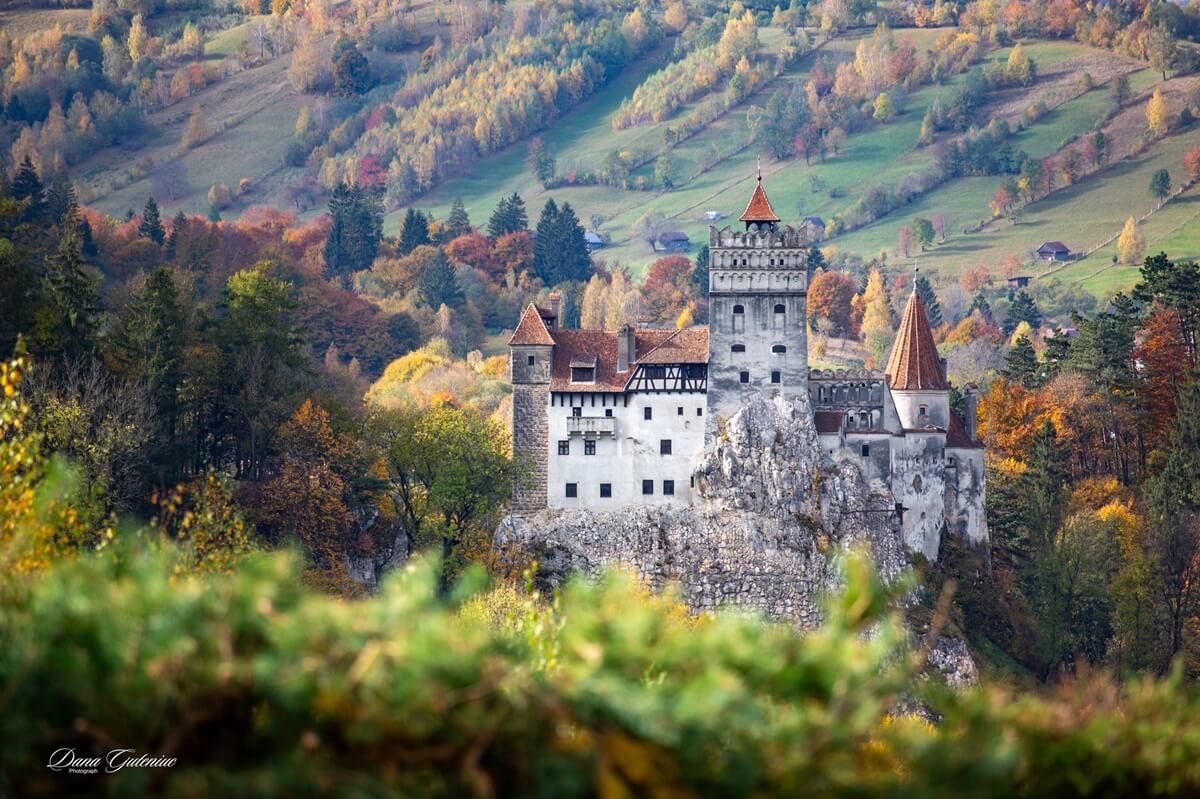
Few European regions arrive in autumn with an imagination as powerful as Transylvania’s. Endless forests, mountains, medieval cities, fortresses and, of course, centuries of stories that eventually became intertwined with Dracula.
Fortunately, reality is much more interesting than the cliché.
Brașov can serve as a base for exploring much of the region. Its historic center, surrounded by the Carpathians, allows you to combine a small European city with nature excursions and visits to nearby towns and castles. Bran is the best-known stop because of its tourist association with Dracula, although it is worth extending the route to places such as Sinaia, home to Peleș Castle, or Sighișoara, one of the region’s best-preserved medieval ensembles.
In autumn, the Carpathian forests transform the journey. Differences in altitude also mean that colors do not change across the entire region at the same time, extending the period in which autumn landscapes can be found.
October has an obvious added appeal for those who enjoy the atmosphere associated with Halloween, but reducing Transylvania to vampire stories would mean missing what makes the destination interesting: Saxon villages, fortified churches, local cuisine, mountains and some of the most distinctive roads and rural landscapes in Eastern Europe.
Best time: October.
10. A Route Through Tuscany and Umbria, Italy
If the Dolomites represent the most mountainous side of Italian autumn, the center of the country offers a completely different experience. Tuscany and Umbria trade the drama of the Alps for hills, vineyards, olive groves, medieval towns and historic cities.
Florence may be the natural starting point, but the trip becomes much richer once you leave the big city. Siena, Arezzo, Montepulciano, Pienza, Orvieto, Perugia and Assisi make it possible to build a route where distances are relatively short but the landscape changes constantly. Secondary roads cross fields and small towns where autumn coincides with part of the harvest season and with cuisine especially connected to the land.
Umbria is particularly interesting at this time of year for its seasonal produce and truffles, while Tuscany’s wine regions offer another way to experience landscapes that are usually much drier during summer. The grape harvest, markets and food celebrations make autumn here about far more than simply fewer tourists; specialist travel publications continue to highlight Umbria as one of Europe’s especially interesting destinations in this season because of its food and truffle season.
This is also one of the destinations where it pays to travel slowly. Trying to visit five towns a day usually turns a beautiful route into a collection of car parks and quick photographs. Choosing fewer places, spending a night or two outside the major cities and leaving time to eat without watching the clock is probably a better way to get to know this part of Italy.
Best time: October and early November.
So, where is it most worth traveling in autumn?
The answer varies considerably depending on the exact timing of the trip. September still retains some of summer’s character and is especially interesting for alpine destinations, mountain routes and wine-harvesting regions such as the Douro. It is also a good option if you want to avoid both the intense heat of July and August and the considerably colder temperatures that arrive a few weeks later.
October is probably the most complete month for traveling around Europe in autumn. The landscapes of Slovenia, Bavaria, Scotland, Transylvania and northern Italy begin to show their most recognizable colors, while cities such as Prague are especially pleasant for walking. It is also an excellent month for trips focused on food, nature and wine regions.
November, by contrast, requires choosing your destination more carefully. Days are shorter in the north and many landscapes are already beginning their transition toward winter, but that opens up other possibilities. Cultural cities become more important, and southern places such as Seville continue to offer much milder temperatures than much of the continent. It is also an interesting time for travelers who prefer even fewer visitors and do not need to guarantee outdoor activities all day.
Perhaps that is precisely one of Europe’s greatest advantages in autumn: there is no single way to experience the season. You can spend a morning surrounded by golden larches in the Dolomites, explore the vineyards of the Douro a few days later or sit on a terrace in southern Spain while afternoons in the Scottish Highlands are already becoming considerably shorter.
Summer often encourages us to travel in search of one specific place. Autumn, on the other hand, invites us to choose what kind of trip we want to take. And few times of year offer so many different possibilities without leaving Europe.
Take Journety on your next trip
Got a proposal, or just want to know more? Write to us.